The situation
Understanding something while consuming it does not prove a learner can recall, explain or apply it later.
The project started as a broad look at digital learning and narrowed onto one contradiction. Learners assemble their own systems from tools that each solve one part: video for explanation, AI for simplification, search and forums for other views, PDFs for depth, courses for structure, notes for memory.
The team ran 1-on-1 interviews, structured responses across disciplines, a focus group of six, and affinity mapping. Five findings kept coming back: understanding is not the same as retention; learners used AI for quick explanations and still checked them; having more resources made continuity harder; autonomy mattered; and active use was what revealed learning.
We treated recurring patterns as design evidence, not as population-level claims. The sample was small and was never asked to prove that Athena works.
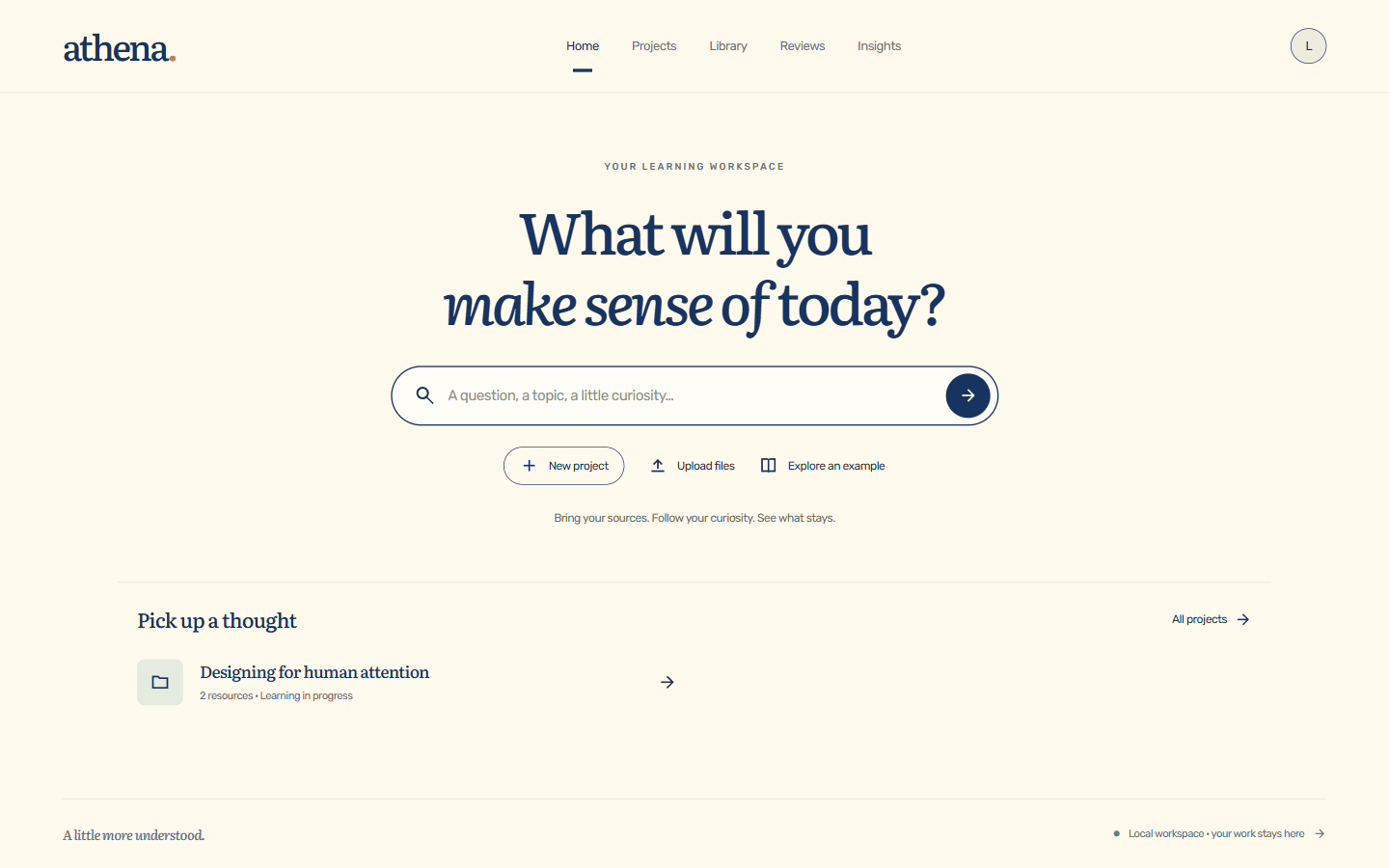
What it is
This was a four-person team project with Nishtha, Anushrutha and Trisha. My part was research synthesis, product and interaction design, and the prototype build.
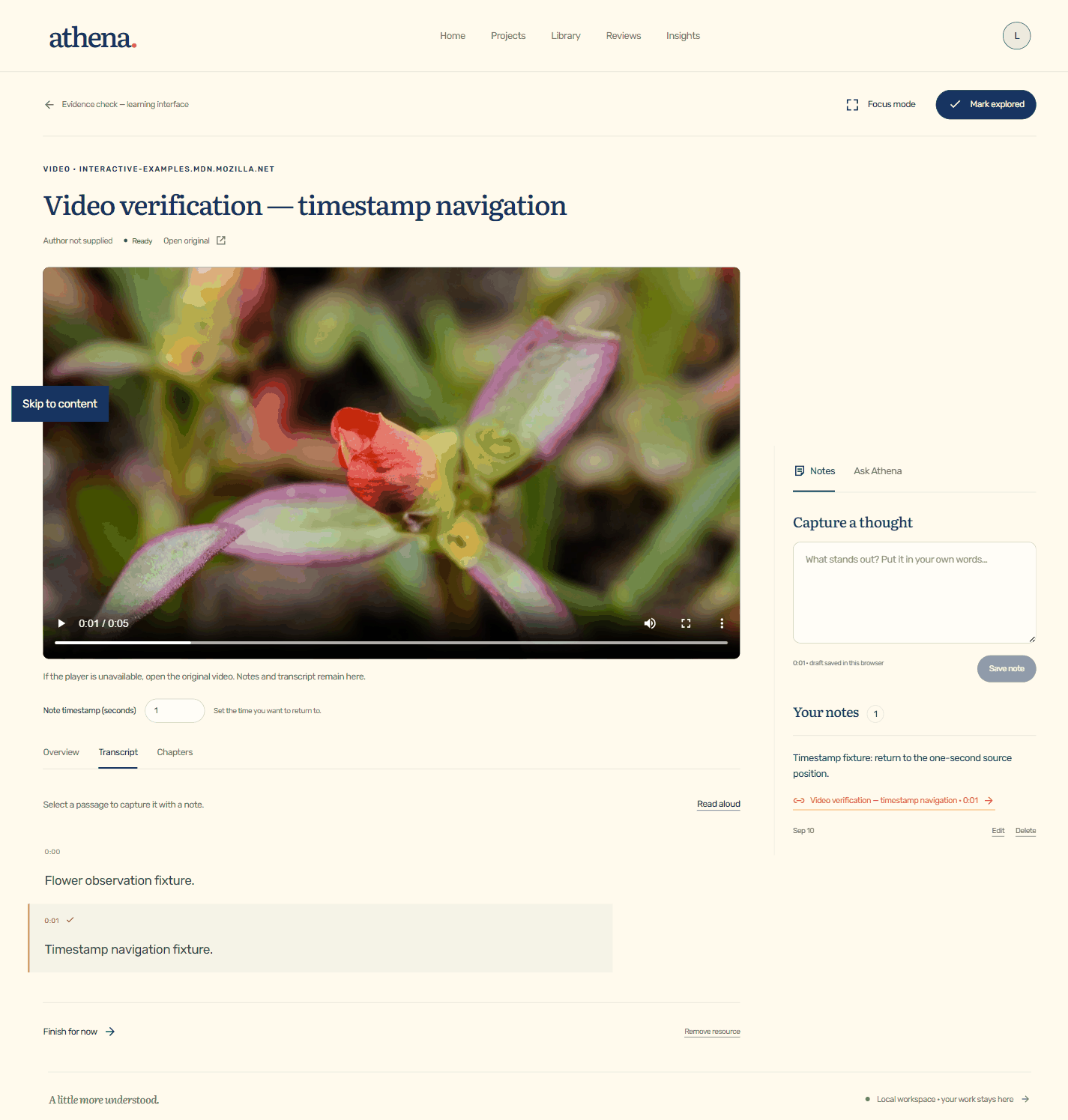
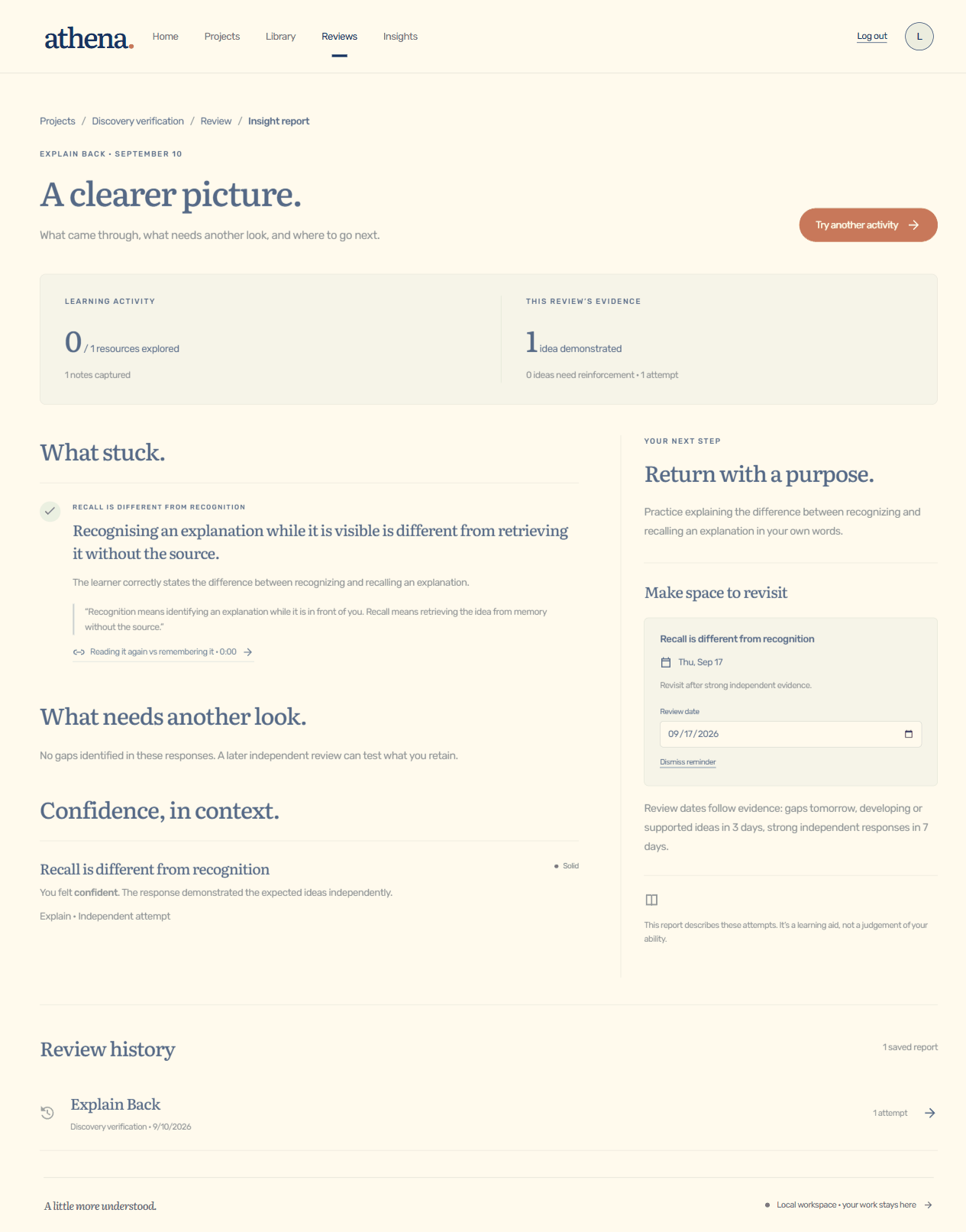
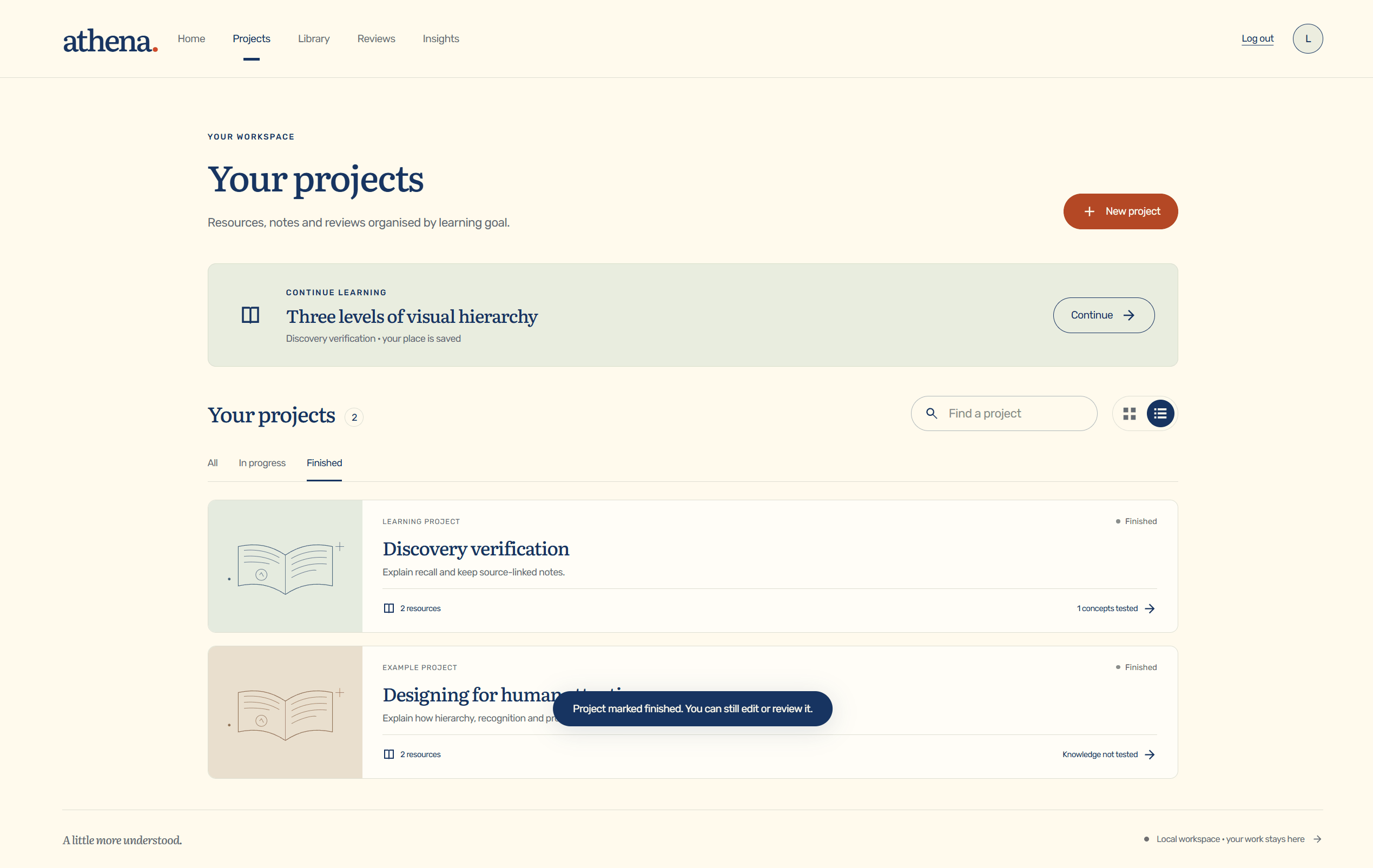
We designed one workspace where a project holds its resources, notes, review and feedback, with three review modes. The feedback names what was demonstrated and what is missing, down to the exact source passage.
The prototype is a real working build, not a click-through, and it was checked against all eighteen of its own acceptance criteria.
'It makes sense' is not the same as 'I know it.'
What changed during the build
Deciding that review lived inside the project, instead of in a separate quiz app, shaped everything else: feedback can point back to the exact passage it came from, and help arrives after an attempt instead of before it.
Building it also forced the honest boundary. The prototype works and its criteria passed, but nobody has shown that learners retain more because of it. That test is designed and not yet run.